
 English resume
Factors contributing to successful river restoration (COSAR)
This factsheet offers recommendations for planning stream and river restoration projects. These recommendations take into account landscape context, legacy effects, and spatial scale in relation to environmental drivers. In addition to ecological outcomes, it considers the societal perception of river restoration projects.
|
Thema |
Waterkwaliteit, COSAR: Improving the ecological status of rivers |
|
Tags |
|
|
Downloads |
1. INTRODUCTION
2. RELATED TOPICS AND DELTAFACTS
3. STRATEGIC CONTEXT
4. GRAPHICAL ABSTRACT
5. CONTENT
6. COSTS AND BENEFITS
7. SPECIFIC CONDITIONS
8. KNOWLEDGE GAPS
1. Introduction
Many of Europe's stream and river ecosystems are degraded due to pollution, drainage, water abstraction, channelization, and loss of riparian habitats. These factors have resulted in habitat loss, biodiversity decline, poor water quality, and hydrological extremes (Haase et al., 2023, https://doi.org/10.1038/s41586-023-06400-1). Since the 1990s, measures have been implemented to improve water quality and restore hydromorphological conditions. These efforts were bolstered by international legislation such as the EU Water Framework Directive (2000/60/EC) and the amended Swiss Water Protection Act of 2011. These legal frameworks increased available budgets and raised awareness of the need for a more holistic approach to river ecosystem restoration, including ecological, hydrological, morphological, and physical-chemical goals. Since the beginning of river restoration activities, there has been an evolution in the application of restoration measures. Starting with water-quality-focused schemes, such as installing water treatment facilities and removing stormwater drains, and instream restoration measures, such as installing boulders and placing dead wood, recent projects have adopted a more integrated, watershed-based approach to address the multiple stressors impacting the ecosystem.
Despite the large number of restoration projects and a considerable body of research devoted to the effectiveness of restoration measures, ecological success rates seem to be low. Moreover, adequate monitoring of the effectiveness of these measures is often lacking (Dos Reis Oliveira et al., 2020, https://doi.org/10.1016/j.jenvman.2020.110417). One reason for the limited ecological effects is that restoration outcomes depend on the landscape context. Multiple environmental and biological drivers act at different spatial scales, from the reach to the watershed (Friberg et al., 2016, https://doi.org/10.1002/wat2.1190; De Vries et al., 2019, https://doi.org/10.1016/j.scitotenv.2019.133630). Legacy effects, such as historical conditions, can also play an important role in the recovery pattern of biological communities (Belliard et al., 2020, https://doi.org/10.1007/698_2019_380), yet they are rarely considered driving factors in analyses of restoration effects.
As stakeholder groups’ perspectives and restoration targets for rivers vary, their perception of restoration outcomes differ as well. It has been shown that restoration managers, ecologists, and visitors use different information to rate restoration, and hence, get to different perceptions of restoration success (Jähnig et al. 2011, https://doi.org/10.1890/10-0618.1). For data-driven, standardized evaluations, a well-developed body of hydromorphological and ecological assessment schemes are available. They are often used, even if they were not specifically developed for restoration monitoring. In contrast, there is a knowledge gap on societal needs and benefits from restoration and accordingly, no widely-agreed indicators or monitoring schemes for the societal benefits of river restoration projects exist (Kaiser et al. 2020 https://doi.org/10.1016/j.ecoser.2020.101206]). However, the view that social aspects and cultural ecosystem services should be given greater consideration in river restoration projects is becoming increasingly widespread. This would lead to broader social acceptance and thus to more sustainable solutions.
2. Related topics and Deltafacts
Related Deltafacts
Monitoring of restoration projects (in Dutch)
Restoration measures in running waters, ‘Building-with-nature/nature-based solutions’ (in Dutch)
Adaptation pathways for nature based river landscape restoration (in Dutch)
COSAR Deltafacts
- Monitoring of biological outcomes of river restoration
- Legacy effects affect river restoration outcomes
- DAPSIR: a predictive model of river restoration outcomes
- Use of social media data in river restoration
Project-related links
3. Strategic context
The knowledge presented in this Deltafact, describing the role of local and catchment context on the ecological and societal outcomes of restoration, is based on the findings of the European COSAR project, which is part of the joint ERA-Net Biodiversa+ / WaterJPI 2021 BiodivRestore call. It can be used to plan future restoration projects and inform the next generation of watershed management plans. This information can help reach the goals of national and international environmental legislation and manage stakeholder expectations. Currently, environmental legislation in Europe does not consider societal perception when assessing restoration outcomes. By examining both ecological outcomes and societal perceptions, we can identify situations that benefit both biodiversity and people. Because the information in this Deltafact is derived from a large number of restoration projects in different European countries, the results can be generalized and transferred. This comprehensive approach contributes to understanding the challenges experienced in different European regions and finding solutions applicable beyond regional or national borders.
4. Graphical abstract
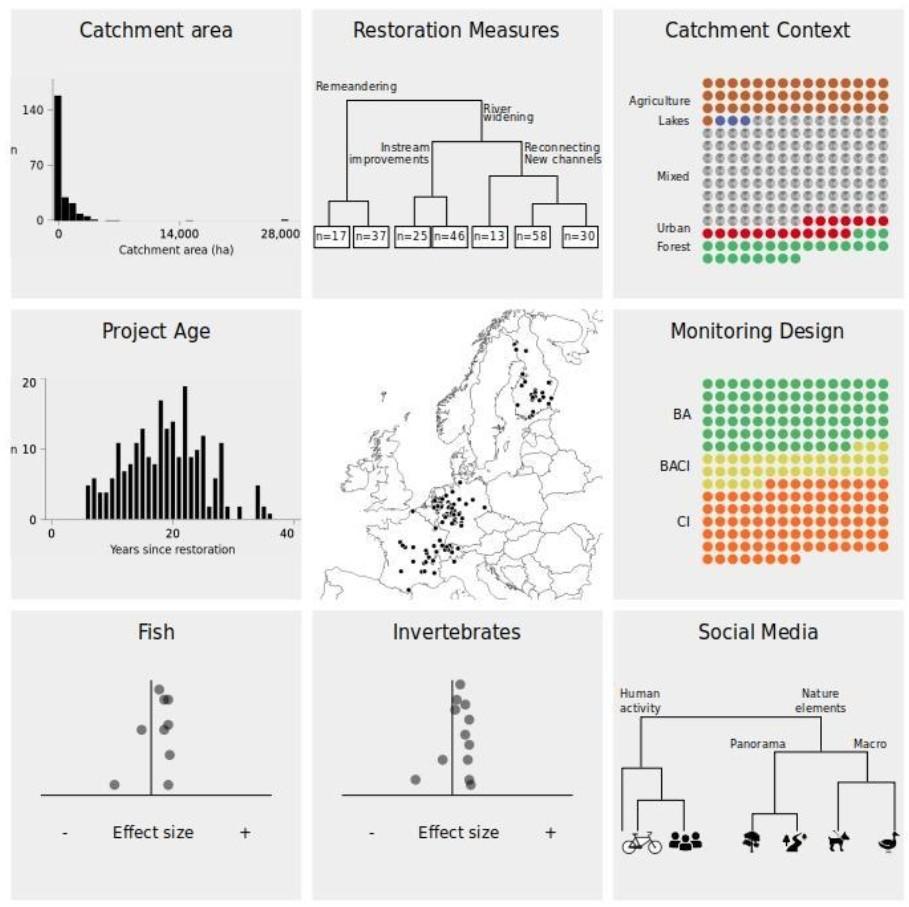
Figure 1. Schematic overview of the content included in the Biodiversa project COSAR.
5. Content
In the COSAR project 225 restoration projects from six European countries were examined, showing that restoration outcomes varied widely in terms of both biodiversity response and visitor perception. To explain this variability, variables that could be uniformly recorded at the European level were identified, describing past and present land use, as well as the local environmental context. These variables could explain only some of the variability observed between restoration project outcomes. However, a large amount of the variability could not be explained. This underscores the importance of adapting restoration measures precisely to the local context based on the characteristics of the watercourse, the ecological and societal boundary conditions of the river system, and the specific management goals achievable at a given location. Specific outcomes are listed below.
a) Restoration effects on fish
The COSAR analysis used more than 1,000 samples of fish communities from 177 restored river reaches, as well as suitable degraded control reaches. On average, across all projects, the species and functional richness of the communities increased by 12% and 8%, respectively. However, in approximately one-third of the projects, a decrease in these parameters was observed. Other studies have also observed limited increases in these parameters (Thomas et al., 2015, https://doi.org/10.1086/681820; Pilotto et al., 2019, https://doi.org/10.1111/cobi.13176). However, this decrease could actually be a desired effect, especially in small upland streams, as the presence of more than a few naturally occurring species in these systems often indicates different types of degradation. Regarding changes in the functional composition of species assemblages, we observed shifts toward more specialized species compared to generalist species in many ecological traits as a result of river restoration.
b) Restoration effects on macroinvertebrates
Approximately 800 samples of macroinvertebrate communities from 86 restored river reaches and their associated unrestored control reaches were used in the COSAR analyses. On average, across all projects, species richness increased by 12%, while functional richness changed minimally. This result differs slightly from that of Pilotto et al. (2019) [https://doi.org/10.1111/cobi.13176], who found larger effect sizes in macroinvertebrates than in fish. Regional land use context and variables characterizing the properties of the restoration projects (e.g., type of measures applied) had pronounced effects on macroinvertebrates than on fish.
c) Restoration effects on visitor experiences
The visitor perception of 28 restoration projects was examined using photos shared via social media. A total of 17,151 photos were retrieved. The photos were tagged using artificial intelligence tools. Based on these tags, 6,254 photos were first identified as having restored streams and their context as their main content. The restoration-related images were then grouped according to their content. The main focus of visitors was the embeddedness of the streams within their land use context (32% of all photos). Another prominent group of photos depicted animals and plants (26% of all photos). Eighteen percent of the pictures depicted outdoor recreation and social interaction.
Hardly any social media postings were found for most restoration projects (n = 63), which typically involved small streams in rural areas. Other tools are required to explore the societal perception of river restoration and the cultural ecosystem services provided by restoration projects.
d) Restoration measures
Higher complexity of restoration projects was related with higher effect sizes for fish and macroinvertebrate richness and diversity. Instream restoration measures limited to the riverbed only produced subpar outcomes in terms of species richness and diversity in the COSAR project. These results align with those of Simaika et al. 2015, (https://doi.org/10.1016/j.limno.2015.10.001), who also found that the number of species did not increase in such projects, though the abundance of present species increased. Projects that included a mix of measures addressing the riverbed, banks, and valley (i.e., tackling multiple stressors) performed better on all examined indicators. The best results were obtained in projects that reshaped the entire river course to achieve near-natural hydromorphological conditions. Grouped projects that aim to improve longer stretches of a watercourse and affect a larger spatial scale can be more effective than individual projects. Improving habitat quality over larger areas often results in colonization by the desired species of the remaining sections with poor habitat quality (Stoll et al., 2016, https://doi.org/10.1016/j.scitotenv.2016.02.126).
e) Catchment area
In the COSAR project, the area of the catchment upstream of the restoration sites was used as a proxy for river size. COSAR analyses revealed that restoration effect sizes in rivers with smaller catchments were generally higher than in rivers with larger catchments, particularly with regard to the functional diversity of fish and macroinvertebrates. These differences became more pronounced with the age of the projects. The functional composition of species communities along rivers changes from source to mouth (e.g., Vannote et al., 1980; https://doi.org/10.1139/f80-017). Our study, as well as others, has shown that the effects of restoration measures on functional composition vary along the stream continuum (Manfrin et al., 2019; https://doi.org/10.1016/j.scitotenv.2019.01.330).
f) Project age
Many studies have demonstrated that restoration effects unfold over time. Community succession is often assumed to take 5 to 10 years to reach stable conditions (Höckendorf et al., 2017, https://doi.org/10.1111/cobi.12908). The COSAR dataset revealed a positive effect of project age on macroinvertebrate species richness and the functional diversity of fish and macroinvertebrates, particularly in smaller rivers. These effects of project age were not observed in larger rivers. However, other studies have found contrary effects, with species communities reverting to pre-restoration degraded conditions, particularly in small restoration projects, which can quickly degrade if large-scale pressures are not addressed at the landscape level (Thomas et al., 2015, https://doi.org/10.1086/681820). Restoration practitioners tend to evaluate restoration results too early. As a result, the effects of disturbance caused by restoration work, succession processes, and restoration effects are mixed up in the assessment. A meaningful assessment requires patience. This allows the restored ecosystem to reach a dynamic equilibrium in which the effects of restoration are fully realized.
g) Current catchment land use
The restoration effect sizes were strongly influenced by catchment land use, particularly for macroinvertebrates. Urban and cropland land uses had an interactive effect on species richness and functional diversity. In general, restoration effect sizes increased with the proportion of urban land use in the catchments. However, this increase decreased if the proportion of cropland in the catchment was higher. Nevertheless, high effect sizes do not necessarily indicate the best outcomes after a restoration project is completed. High effect sizes may be related to the initial poor condition of the ecosystem in intensely urbanized areas, which results in the greatest observed changes. Agricultural land use is also a well-known risk factor for restoration (Kail et al. 2015, https://doi.org/10.1016/j.ecolind.2015.06.011; Feld et al. 2011, https://doi.org/10.1016/B978-0-12-374794-5.00003-1),, and species communities do not always react as desired due to remaining stressors (e.g., fertilization, pesticides, and fine sediment input), despite improved habitat conditions. In such areas, buffer strips wide enough to reduce the effects of diffuse pollution and sediment input from adjacent fields are of great importance (Palt et al. 2023, https://doi.org/10.1111/1365-2664.14386). In Europe, rivers with a high proportion of cropland in their catchment areas have generally exhibited below-average biodiversity trends in recent decades (Haase et al., 2023, https://doi.org/10.1038/s41586-023-06400-1).
h) Historical catchment land use
Historical catchment land use was assessed for all restoration projects. The 1970 land use cover map was the earliest available uniform European dataset, and it was used to analyze restoration effects in addition to current land use. Within the COSAR project dataset, no statistically significant effect of historical catchment use could be determined. Nevertheless, it is plausible that land use history affects restoration outcomes. In catchment areas subject to long-term intensive use, the species community may be particularly impoverished. The colonization of fish and macroinvertebrates in restored river reaches depends heavily on the species pool in the immediate vicinity (Sundermann et al., 2011, https://doi.org/10.1890/10-0607.1). Stoll et al., 2014, https://doi.org/10.1371/journal.pone.0084741). Additionally, legacy effects from chemical or morphological changes due to historic land use can hinder the recovery of species communities after restoration.
i) Monitoring design
The COSAR dataset included restoration projects that were assessed using the before-after (BA), control-impact (CI) and before-after-control-impact (BACI) monitoring design. For most indicators, projects monitored with the BA design resulted in the highest effect sizes. Effect sizes of projects monitored with CI and BACI designs were similar for most indicators except macroinvertebrate species richness, where BACI effect sizes were lower. The strengths and weaknesses of different sampling designs have been discussed in depth in the literature (Roni et al. 2018, https://doi.org/10.1002/nafm.10222), especially space-for-time-substitutions (CI design type) are commonly viewed critically. Hence, even though most expensive and labour-intensive, the full BACI monitoring design is highly recommended to monitor restoration effects. It is basically the only approach which provides a statistically solid underpinning of the ecological effectiveness of restoration measures.
6. Costs and benefits
In the COSAR project, we analyzed 225 restoration projects across Europe. These projects covered a wide range of local and regional settings, implemented measures, and monitoring designs. To account for project diversity and allow for cross-project comparability, we adopted ecological and socio-ecological perspectives, characterizing a site’s geographical context and evolution over time. This multidisciplinary approach offers many benefits for practical river management, particularly for river restoration planning and implementation, ranging from large-scale strategic planning to local project design:
- Enhanced ecological restoration effects. The systematic analysis of restoration results and respective context variables helps identify factors contributing to the success or failure of achieving restoration goals.
- Increasing societal acceptance. Explicitly considering visitor experiences and cultural ecosystem services, for instance in project planning and monitoring, increases societal acceptance of projects.
- Integrating effects over space and time. By including environmental variables as well as social media input om the scale for both the restored reach and the total catchment enables to collect perspectives on restoration projects at various spatial and temporal scales.
- Broadening the basis of project evaluation. Adding social media data helps adopt a more diverse perspective on restoration effects because it considers not only specialists' opinions, but also those of the general public.
- Considering legacies. Proactively accounting for the potential long-term effects of past human-caused disturbances leads to a more realistic forecast of restoration outcomes.
7. Specific conditions
In the COSAR research project, we followed a cross-project approach. We compared 225 restoration projects from five European countries, which covered a wide range of project designs, local contexts, and catchment characteristics. A cross-project approach contributes to a better understanding of cause-and-effect relationships and mechanistic pathways that influence restoration outcomes. Cross-project comparisons complement the lessons learned from project-level surveys, particularly contributing to large-scale endeavors such as strategic river restoration planning across entire catchments, river basins, or political units. Although opportunity-based restoration is valuable, important, and common, prioritizing river reaches for restoration based on large-scale analyses of ecological potential, human impact, and available evidence can further increase the cost-effectiveness of river restoration.
8. Knowledge gaps
Within the COSAR project, we identified two major knowledge gaps that need to be addressed by research and management to increase the effectiveness of river restoration.
1. Scale of effects
- Funding for river restoration and available land for restoration is limited in most countries. This results in only a small proportion of degraded rivers being restored. Additionally, political pressure to distribute limited resources fairly across regions can lead to smaller individual projects. In Switzerland, the goal is to restore 4,000 kilometers of rivers and lakeshore by 2090. This accounts for 5% of the river network length but only one-fourth of the country's heavily degraded rivers. No equivalent reliable long-term financial planning exists in EU countries to ensure that the large proportion of rivers that currently do not meet good ecological conditions will be restored.
- To halt the decline in biodiversity, the effects of river restoration projects must expand beyond the restored areas, a concept generally accepted in practice but rarely tested. Consequently, monitoring of river restoration outcomes is mostly done within the project perimeter where the restoration project was implemented. This makes it impossible to observe potential propagation of effects. The restricted spatial scale of monitoring is due to financial reasons, as restoration monitoring is labor-intensive. To reduce costs while covering a larger spatial scale, trained local citizen scientists (e.g., river trusts) could collect data at a higher spatiotemporal resolution but with lower precision. Alternatively, stratified random sampling could be applied within a watershed or river segment. Emerging monitoring and identification techniques, such as (e)DNA metabarcoding, may also provide opportunities for monitoring and assessing restoration projects.
2. Legacy of past conditions
- The effects of historical disturbances can persist for decades or even centuries, thereby influencing the trajectory of current management interventions, including river restoration projects. Therefore, consideration of landscape and ecosystem changes, as well as human impact, at a given site and within a catchment is key for reliable effect forecasting and project planning. However, historical data is often missing, unknown, or difficult to access, which complicates its proper inclusion in local project planning, especially given limited personal and financial resources. Ideally, strategic river restoration planning at a larger spatial scale would incorporate the historical dimension to provide insight into relevant human development in the area. This may require the involvement of specialists with the necessary expertise (e.g., historians). While historical information is valuable for understanding today's patterns and processes, it's important to note that historical reference conditions may not provide fully reliable guidance for future rivers in a changing climate.